
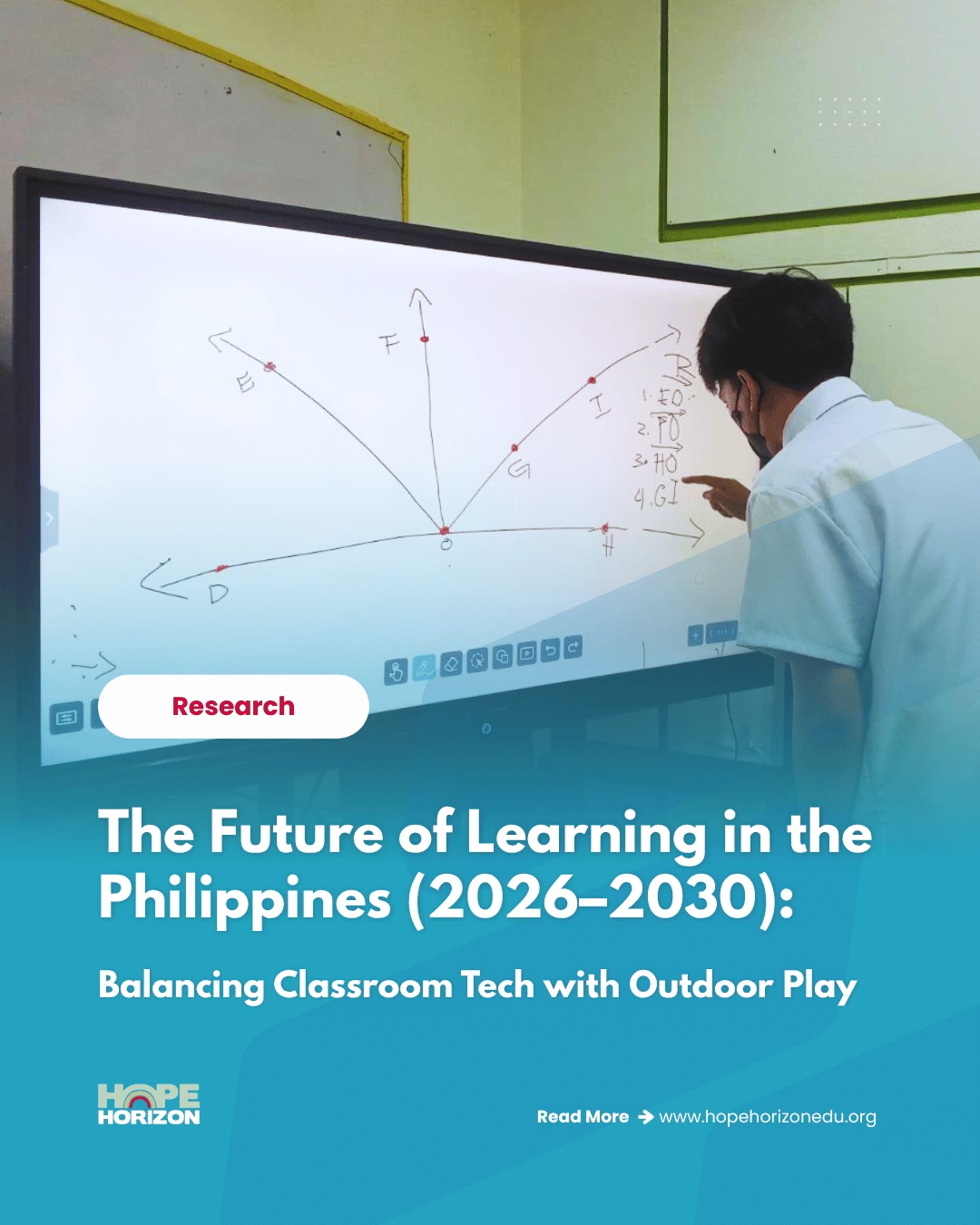
Mga magulang, handa na ba ang ating mga anak para sa hinaharap ng edukasyon sa Pilipinas?
Sa susunod na limang taon (2026–2030), mabilis na magbabago ang sistema ng pagtuturo sa ating mga paaralan. Mula sa pagpasok ng Artificial Intelligence (AI) at mga bagong teknolohiya sa silid-aralan, hanggang sa muling pagbibigay-halaga sa paglalaro sa labas at pakikisalamuha sa kalikasan, mahalagang maging gabay at handa tayo bilang mga magulang.
Paano nga ba natin mababalanse ang modernong teknolohiya at ang sapat na galaw sa labas ng bahay upang masiguro ang malusog at matagumpay na kinabukasan ng ating mga anak? Alamin natin ang mga pangunahing trend at payo para sa pamilyang Pilipino.
1. The High-Tech Classroom: AI and Automation in Philippine Schools
Artificial intelligence and digital tools have officially entered the Philippine educational system. The Department of Education (DepEd) has issued guidelines encouraging educators to integrate AI responsibly into teaching and learning. Across the country, students are already utilizing digital tools like ChatGPT, Canva AI, Grammarly for research, content creation, lesson support, and assignment assistance.
To streamline administrative burdens and improve system efficiency, DepEd has rolled out several targeted technology initiatives:
- Project DUNONG: Automating student reporting and learning assessments.
- Project TALINO: Utilizing data to identify school infrastructure gaps.
- Project SIGLA & SABAY: Assisting in early detection of student malnutrition and screening reading or speech difficulties.
- Project SALIKSEEK: Streamlining access to educational research and data.
As AI tutors become capable of handling individualized content instruction, a child’s formal schooling can increasingly focus on community, social leadership, and human connection. However, this digital shift brings critical challenges that parents must monitor. Concerns surrounding academic dependency, data privacy, misinformation, and the digital divide between urban and rural schools remain significant. Furthermore, as schools recover from the learning crisis—where millions of learners still require foundational support in reading comprehension and mathematics—programs like the Academic Recovery and Accessible Learning (ARAL) initiative remain central to student progress.
2. Why Muddy Boots Matter: The Need for Outdoor Learning
While tech proficiency is vital for 21st-century readiness, educational research emphasizes that digital exposure must be balanced with active outdoor play. Educational pioneer John Dewey noted that firsthand acquaintance with nature, living things, and physical materials provides a foundation for understanding that no textbook or screen can replace.
Outdoor learning and nature-based play offer essential benefits for growing children:
- Mental Health & Stress Reduction: Natural environments have a calming effect that actively reduces anxiety and stress—a crucial counter-weight in an increasingly screen-dominated world.
- Physical Health & Motor Development: Unstructured outdoor movement encourages exercise, strength building, and physical coordination essential for healthy child development.
- Curiosity & Experiential Learning: Outdoor spaces provide an open-ended environment that sparks natural curiosity, creative problem-solving, and critical thinking.
- Social Skills & Teamwork: Collaborative activities in natural settings encourage communication, empathy, and peer teamwork.
- Environmental Stewardship: Direct interaction with nature fosters an early sense of care and responsibility for the environment.
3. Actionable Takeaways for Parents
To help your child thrive in the coming years, consider these practical strategies at home:
- Establish Healthy Digital Boundaries: Guide your child to use AI and EdTech tools as supportive study assistants for research and skill-building, rather than shortcuts for critical thinking.
- Prioritize Daily Outdoor Play: Balance screen time by scheduling regular time outdoors—whether through park visits, backyard exploration, gardening, or sports.
- Look for Holistic Schools: When evaluating prospective schools, seek institutions that combine modern digital literacy with active, hands-on experiential projects and outdoor learning opportunities.
- Focus on Core 21st-Century Skills: Reinforce adaptable skills at home, such as analytical reasoning, self-reflection, collaboration, and intrinsic curiosity.
Sa huli, ang edukasyon ay hindi lamang tungkol sa kung gaano kagaling ang ating mga anak sa paggamit ng AI o kung gaano kabataas ang kanilang marka sa pagsusulit. Ang tunay na tagumpay ay nasa paglinang ng isang buong pagkatao—isang batang marunong gumamit ng makabagong teknolohiya bilang kasangkapan, ngunit may malakas na katawan, malusog na pag-iisip, at pagmamahal sa kalikasan at kapwa.
Bilang mga magulang, tayo ang pangunahing sandigan at gabay sa pagbabagong ito. Sa pamamagitan ng pagtatakda ng tamang limitasyon sa screen time at pagbibigay ng pagkakataong makapaglaro at matuto sa labas, matutulungan natin silang maging mas handa, masigla, at matagumpay sa hinaharap.