
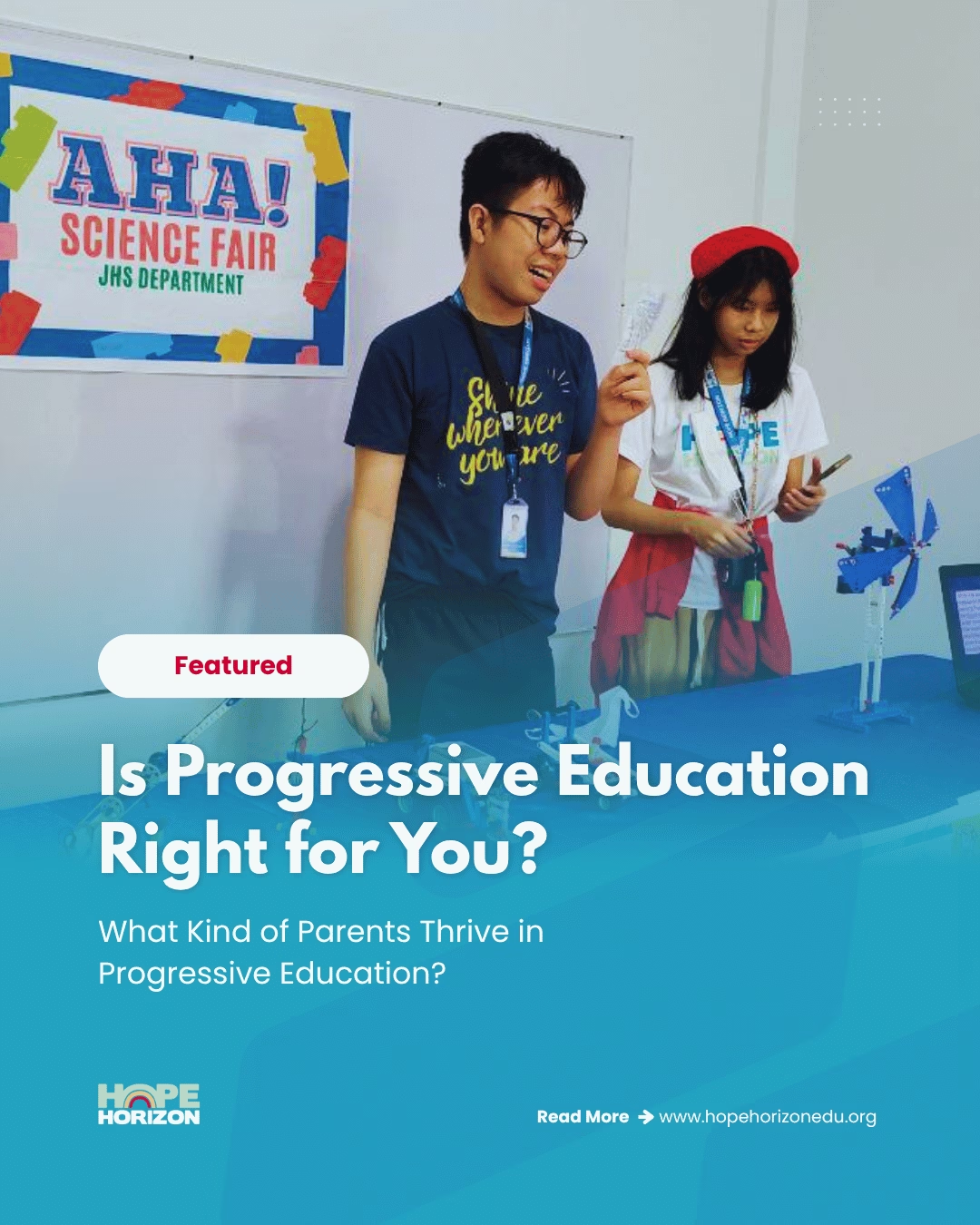
Progressive education is a student-centered pedagogical approach that emphasizes learning by doing, critical thinking, and holistic child development over traditional rote memorization. While conversations about progressive schooling naturally focus on the child’s experience, thriving in a progressive environment requires a mindset shift for parents as well. Because progressive schools replace conventional metrics—like letter grades, rigid textbooks, and teacher-led lectures—with project-based learning and self-direction, parent alignment with these core philosophy values is crucial for a child’s educational journey.
What Kind of Parents Thrive in Progressive Education?
Parents who flourish in a progressive educational community generally share specific educational values:
- Values Intrinsic Motivation Over External Rewards: They prioritize cultivating a child’s natural curiosity, internal drive, and joy of discovery rather than relying on letter grades, class rankings, or external bribes.
- Comfortable with Non-Traditional Assessment: They appreciate evaluations based on student portfolios, self-reflection, and project demonstrations rather than standardized test scores or traditional report cards.
- Embraces Social and Emotional Growth: They believe education should foster social responsibility, democratic engagement, collaboration, and character alongside academic reasoning.
- Trusts Student-Led Exploration: They are comfortable allowing children to learn through hands-on experimentation, cooperative group work, and self-pacing rather than uniform, lockstep instruction.
Is It Really for You? Questions Parents Should Ask Themselves
Before choosing a progressive school, consider asking yourself these reflective questions:
- How do I define educational success? Do I measure achievement primarily through letter grades and test ranks, or through critical thinking, problem-solving, and intrinsic curiosity?
- Am I comfortable without traditional homework and textbooks? How will I feel when my child brings home open-ended project work or personal writing instead of standard spelling lists and textbook pages?
- How do I view classroom discipline and authority? Am I supportive of a school environment where students are taught to question ideas, participate in democratic governance, and think critically rather than practice blind compliance?
- Can I trust an individualized learning pace? Am I prepared to support a curriculum that adapts to my child’s emerging interests and developmental stage rather than following a rigid grade-level schedule?
What Progressive Education Is NOT
Clearing up common misconceptions helps parents understand what to expect:
- It is NOT traditional, lecture-driven instruction: Progressive education rejects passive learning, memorization of isolated facts, and heavy reliance on standardized textbooks.
- It is NOT driven by extrinsic bribes: It avoids using grades, prizes, or competitive ranking systems to force student compliance.
- It is NOT unstructured chaos: Moving away from teacher-centered lockstep teaching does not mean a lack of structure; learning is purposefully organized around integrated thematic units, student contracts, and cooperative community responsibility.
- It is NOT focused purely on content recall: Instead of prioritizing short-term memorization, progressive schooling focuses on 21st-century skills, including complex problem-solving, analytic reasoning, and collaborative teamwork.
Key Signs It’s a Progressive Education School
If you are touring or evaluating prospective schools, look for these distinct markers:
- Learning by Doing: Classrooms feature active experimentation, hands-on projects, and experiential learning activities.
- Integrated, Thematic Curriculum: Subjects like history, geography, science, mathematics, and literature are combined into cohesive thematic units of study rather than taught as isolated subjects.
- De-Emphasis on Textbooks: Learning relies on varied primary resources, nature, children’s own writing, and literature rather than standard spellers or textbooks.
- Portfolio and Project Assessment: Student growth is measured through comprehensive project evaluations, presentations, and individual productions rather than traditional exams and letter grades.
- Collaborative Classroom Design: Physical spaces feature large tables for group collaboration, work areas tailored for subject exploration, and democratic student governance.
- Focus on 21st-Century Skills: Instruction centers on building critical thinking, social responsibility, adaptability, and lifelong learning habits.